
Soil Stabilization Solutions
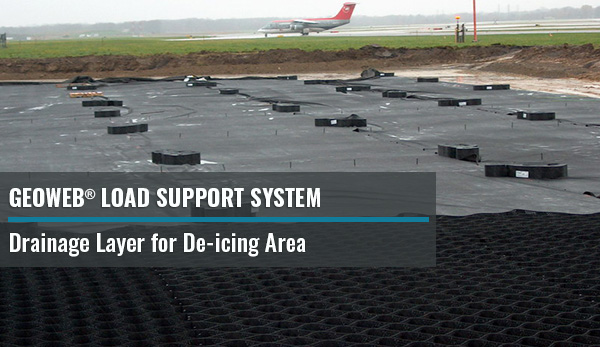
Cleveland Hopkins International Airport
 Cleveland, OH
PROJECT SCOPE
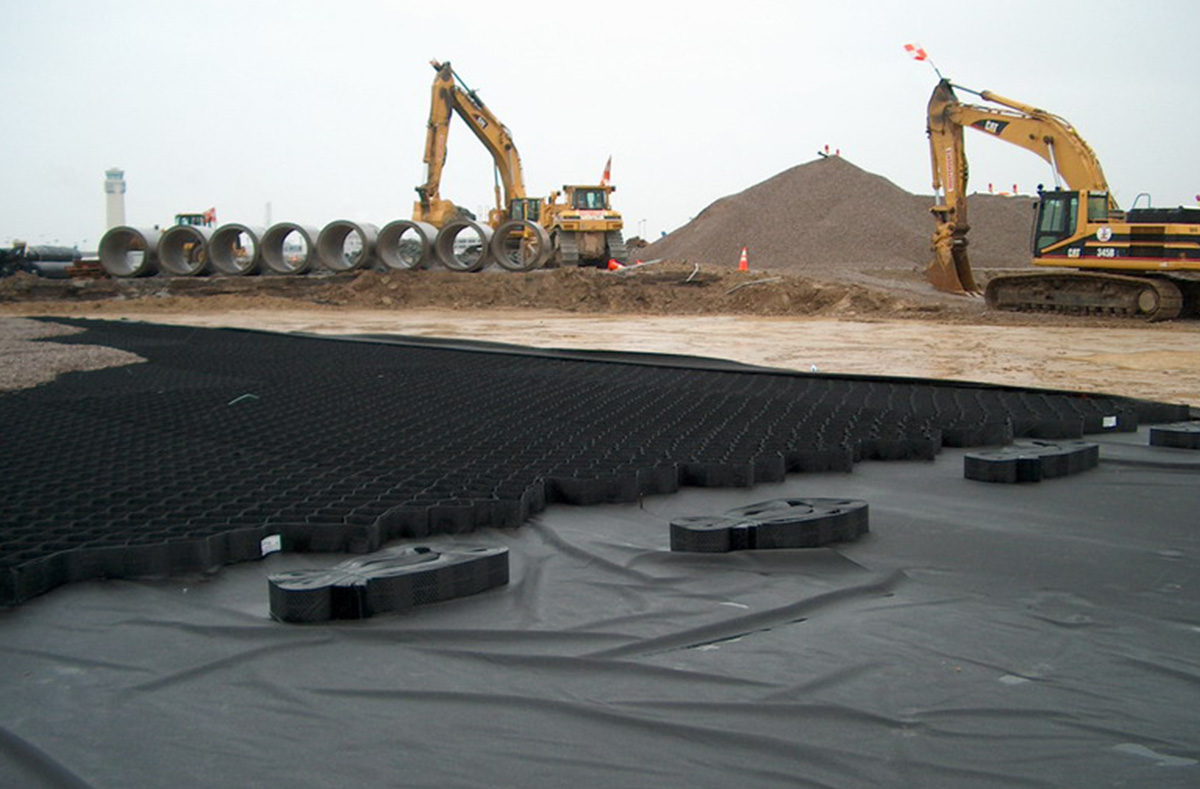
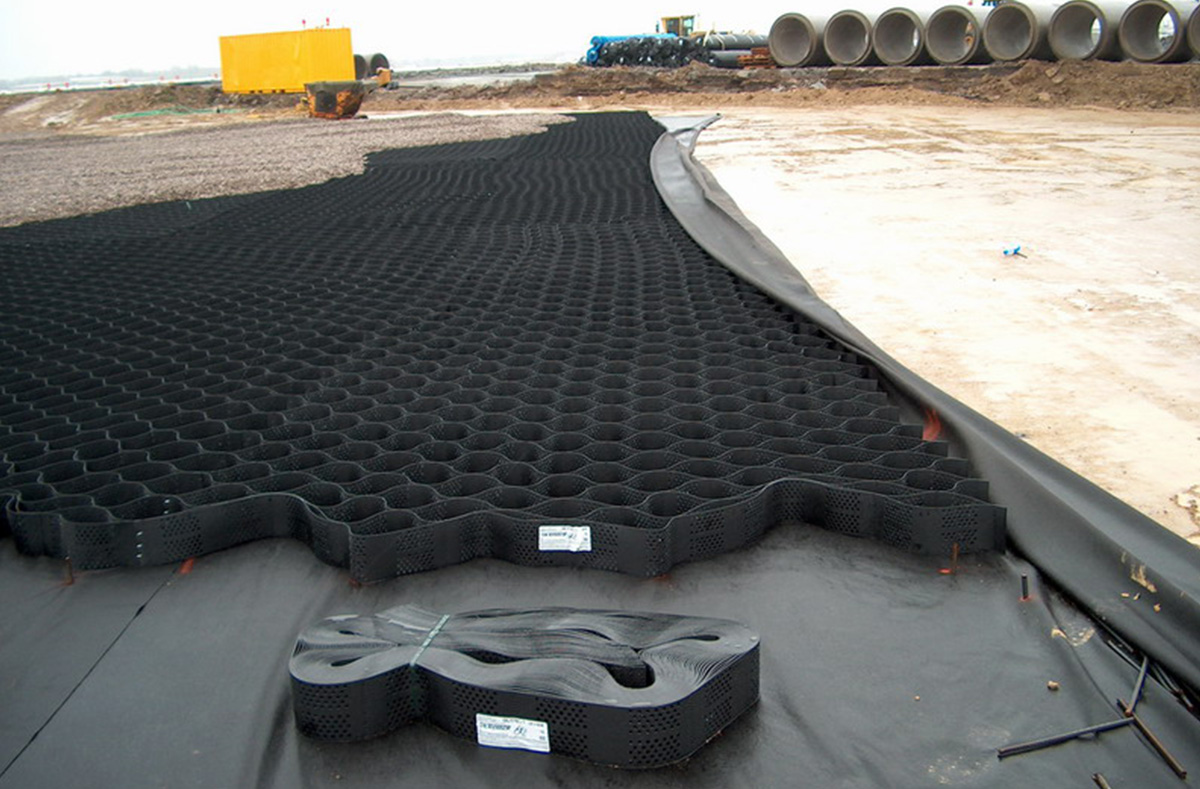
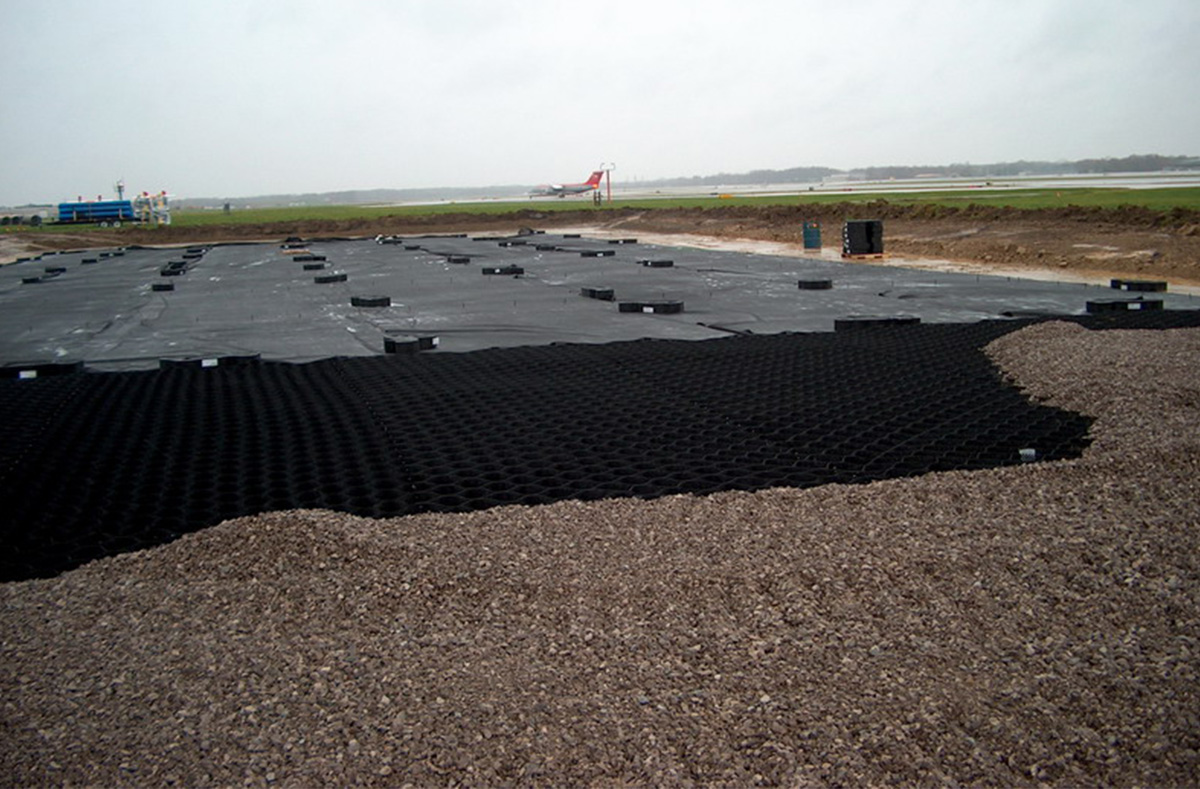
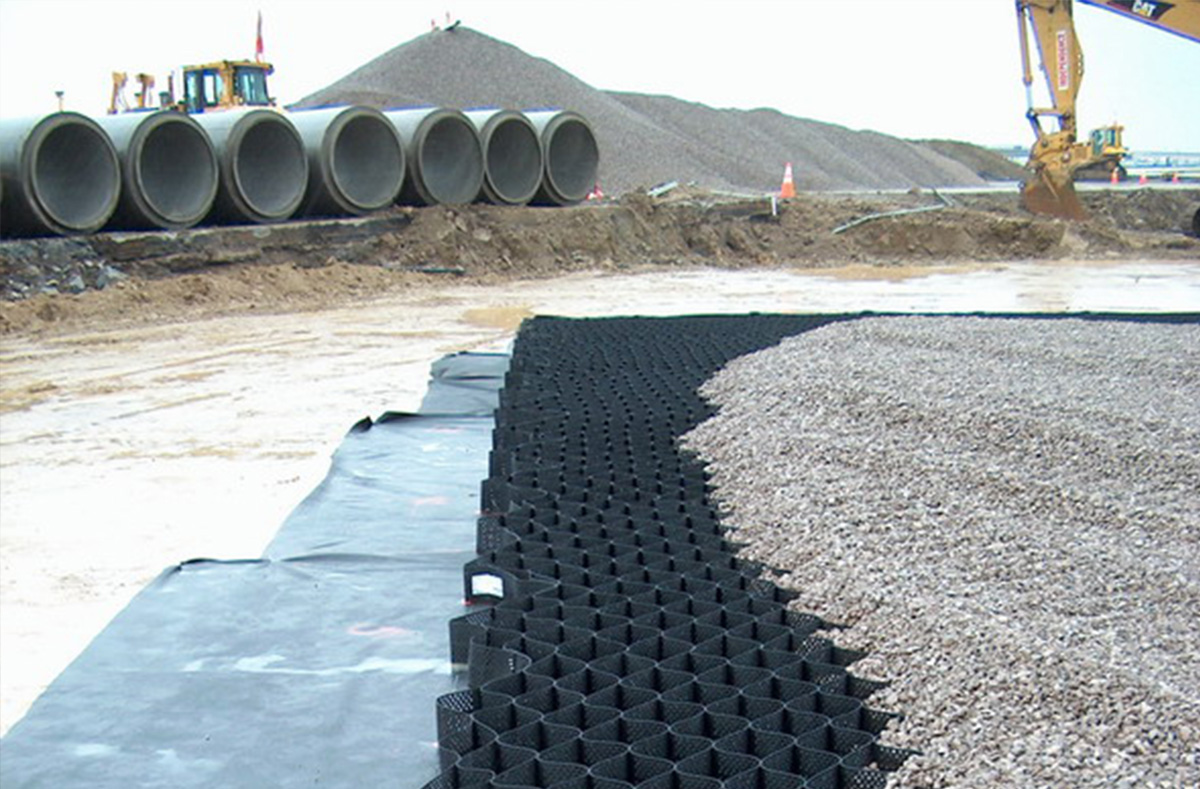
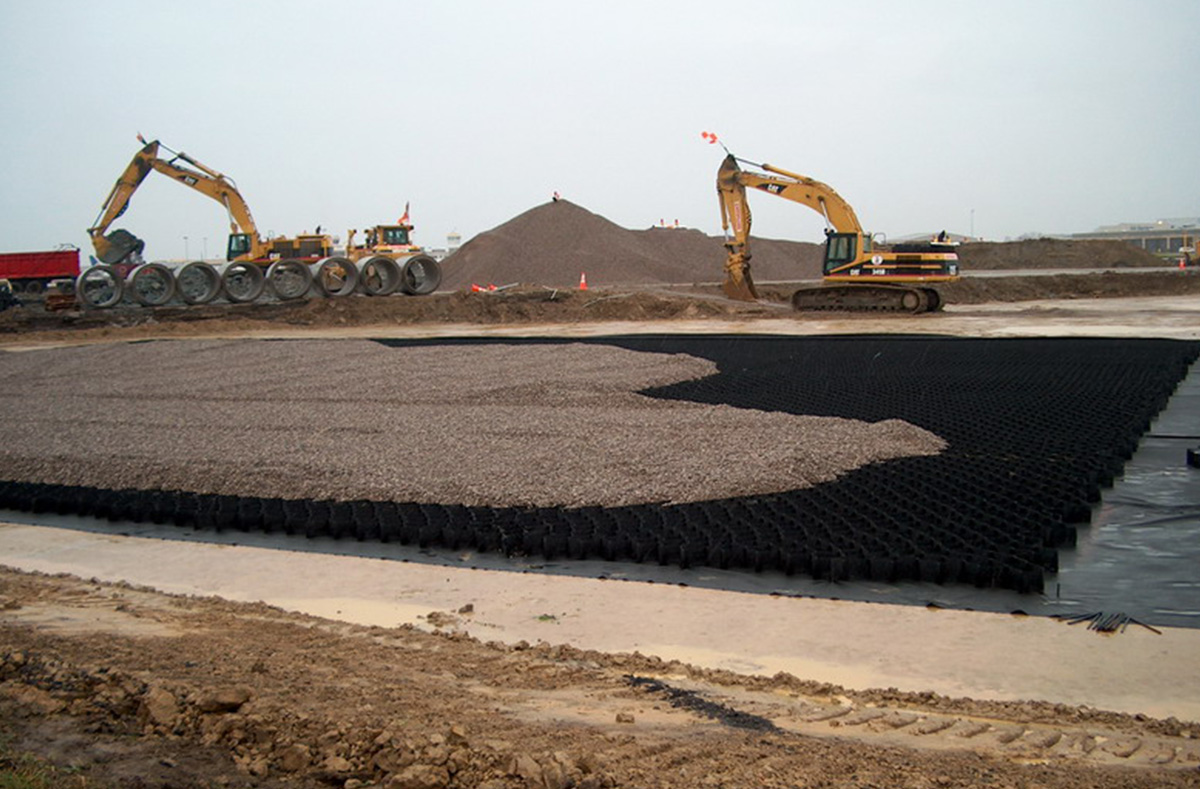
The GEOWEB® Load Support System was utilized for a 1.3 million sq ft. de-icing area at the Cleveland Hopkins Airport. The system serves as a construction support platform over marginal subgrades and a highly permeable structural drainage layer for the 30-acre de-icing site. Confinement in the interconnected cells stabilizes aggregate so it can handle the heavy loads of construction and commercial aircraft.
- Develops a structurally stable aggregate drainage system for groundwater and supports the impervious membranes that prevent the possibility of groundwater contamination.
- Stabilizes aggregate so it can handle the heavy loads of construction and commercial aircraft.
- Controls surface rutting and distribute heavy wheel loads.
- Functions as a drainage layer when backfilled with an open aggregate.
- Cost-effective alternative to conventional concrete or bituminous concrete.
GEOWEB LOAD SUPPORT SYSTEM STRUCTURAL BENEFITS
- Confines aggregates, preventing shear failure and both lateral and vertical movement of the infill material.
- Creates a stiff load distribution system, effectively reducing subgrade contact pressures and vertical deflections.
- Controls differential and total settlement over low-strength subgrades.
- The thickness and weight of confined vs. unconfined structural support systems may be reduced by 50 percent or more.
GEOWEB SYSTEM ENVIRONMENTAL BENEFITS
- Eliminates the need for excessive excavation while increasing structural capacity, which saves construction costs.
- The permeable system minimizes surface runoff and maximizes groundwater replenishment.
- Functions as a natural stormwater retention system with storage capacity, allowing water to fill the aggregate voids and permeate into the existing ground.
- Supports the weight of vehicles and greatly reduces the compaction of underlying soils.
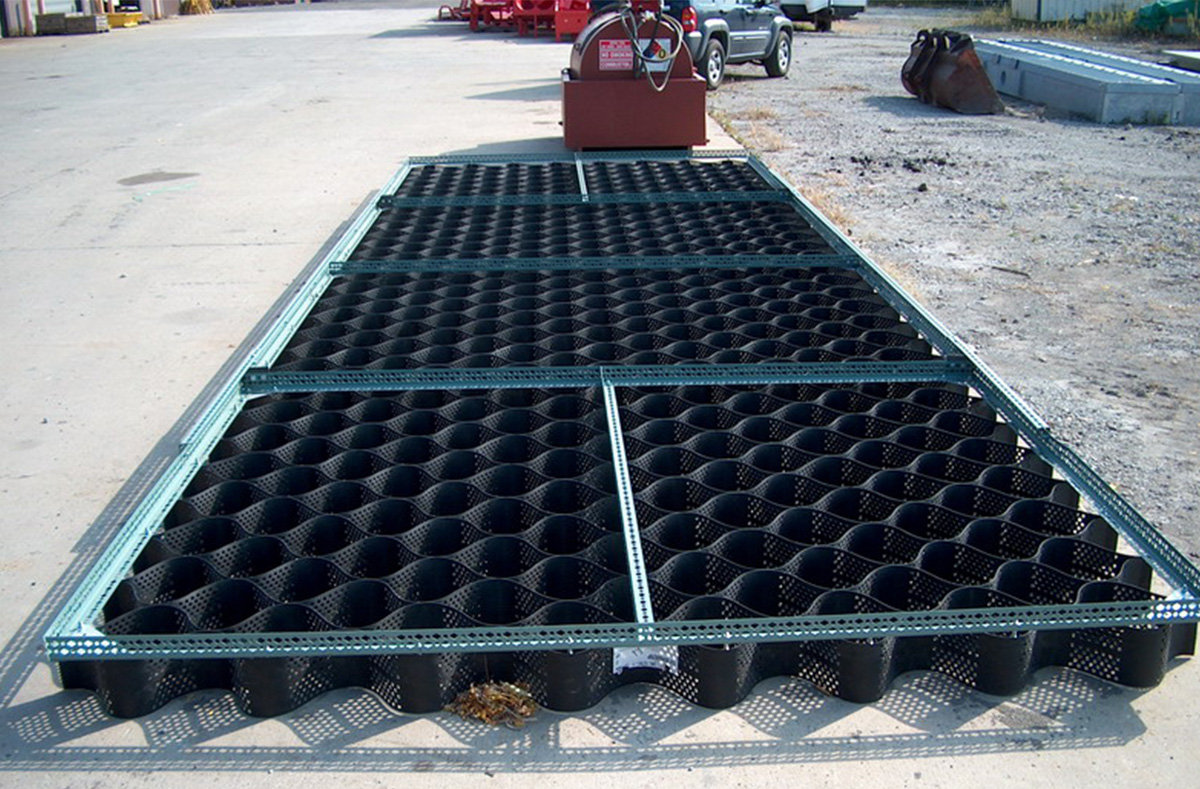
- Cell wall perforations facilitate lateral cell-to-cell drainage beneath traffic areas, resulting in better performance in oversaturated soils.
- The stability of the permeable pavement surface translates to a reduction in maintenance costs.
Project Gallery