
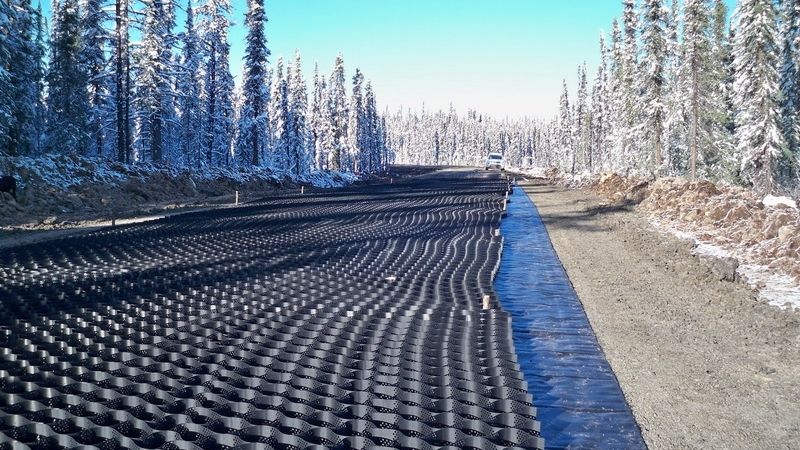
Building Resilient Oil & Gas Roads and Pads Using the GEOWEB Geocells Presented by Bryan Wedin, P.E.
When unpaved roads, drill pads, and work platforms are constructed over weak subgrades, base deterioration can lead to degradation. This degradation leads to unwanted deflections, rutting, and ultimately failure of the surface layer. The GEOWEB® Soil Stabilization System significantly reduces the vertical pressure reaching the subgrade, provides a high-stiffness foundation and reduces cross-section thickness up to 50% or more. Increasing the load capacity of the subgrade allows it to effectively handle heavy vehicle and drill rig loads while reducing maintenance cost.
Learning Objectives:
- Understand the benefits of using the GEOWEB Soil Stabilization System to stabilize surfaces for unpaved roads, drill pads, and work platforms using low-quality fill or sand.
- Discover how 3D-confined base material reduces cross-section depth and provides a more stable base, especially over soft subgrade soils.
- Learn how the GEOWEB system reduces vertical pressure and subbase movement.
- Learn how the GEOWEB system performs effectively when subject to heavy vehicle and drill rig loadings.
I attest to having viewed the on-demand webinar and wish to proceed to my PDH certificate.
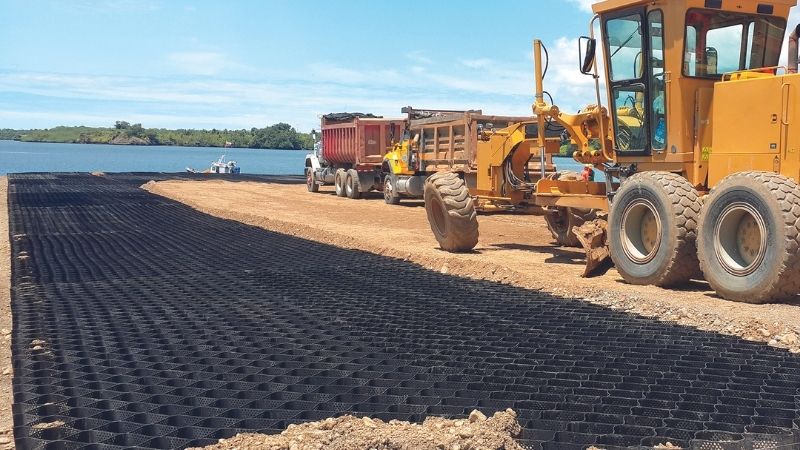
Stabilizing Intermodal & Port Yards Using the GEOWEB® System Presented by Sam Justice, P.E.
The constant weight of parked trailers, stacked containers, and heavy traffic patterns can cause your intermodal or port facility yard’s surface and subbase materials to degrade. This instability of the base materials causes rutting, potholes, and even pavement failure. These surface problems can require costly maintenance, and significant interruption of facility operations, as well as create a loss of income from usable space.
The GEOWEB® system reduces the vertical pressure and provides a high-stiffness foundation, increasing the load capacity of the subgrade to more effectively handle heavy reach stackers and container loads. In the base layer under hard pavements, confinement of aggregate significantly reduces movement, lateral heave, and settlement for increased pavement life. For unpaved surfaces, the GEOWEB system solves surface stability problems with less aggregate and less maintenance even allowing sand or on-site, lower quality aggregate to be used as infill.
Learning Objectives:
- Understand the benefits of using the GEOWEB 3D Soil Stabilization System on surfaces and pavements.
- Learn how the GEOWEB system reduces vertical pressure and subbase movement.
- Understand how the GEOWEB system can reduce pavement depths.
- Learn how the GEOWEB confinement system extends pavement life and reduces maintenance.
I attest to having viewed the on-demand webinar and wish to proceed to my PDH certificate.
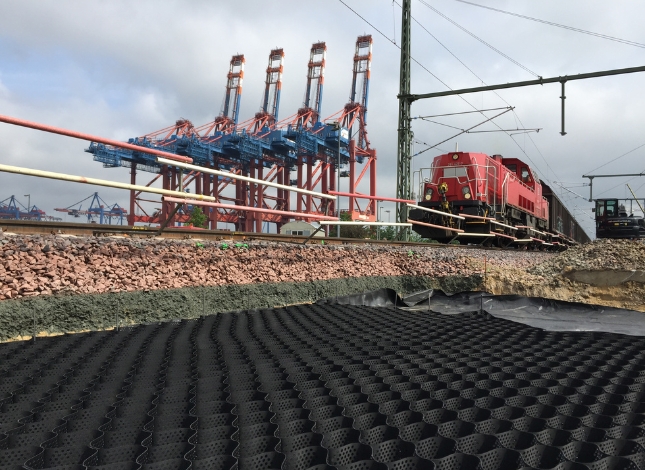
Maximizing Ballast Life & Rail Performance with the GEOWEB® Geocells Presented by Bryan Wedin, PE
Ballast degradation occurs quickly under heavy axle loads, especially when track is constructed over weak subgrade soils. This can result in speed restrictions, increased maintenance, and costly downtime. The GEOWEB® Ballast Stabilization System reduces vertical pressure on the subgrade and creates a high-stiffness foundation that improves track stability and performance.
By minimizing aggregate movement, rotation, and settlement, GEOWEB-stabilized ballast significantly extends ballast life and reduces the need for frequent maintenance.
Learning Objectives:
- Understand the benefits of GEOWEB-stabilized ballast from accredited research and testing.
- Learn how the GEOWEB stabilization system can reduce vertical ballast pressure and ballast movement.
- Understand the typical applications for GEOWEB ballast stabilization.
- Learn how to apply GEOWEB stabilization to extend rail life and reduce maintenance.
I attest to having viewed the on-demand webinar and wish to proceed to my PDH certificate.


