All Products Overview
12 October 2026

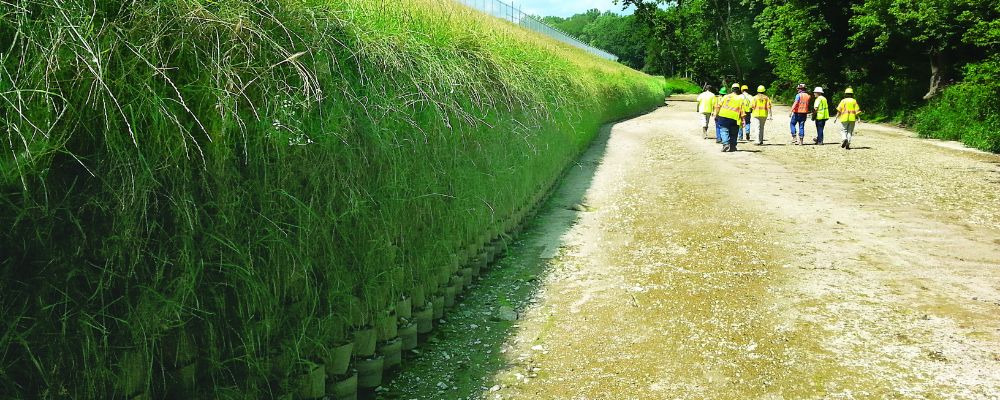
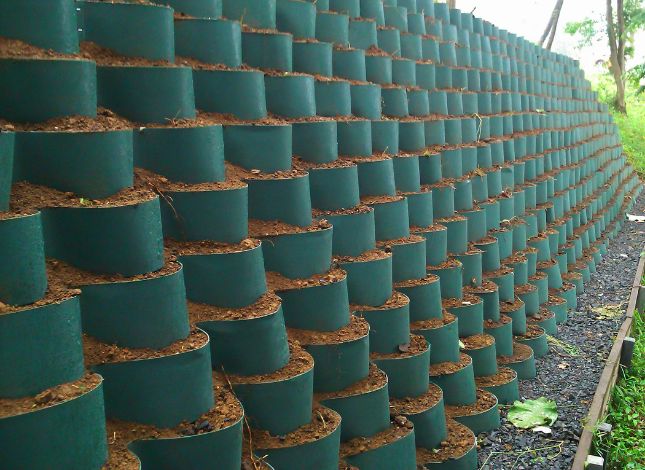
The GEOWEB® Retaining Wall System delivers exceptional versatility and performance. Unlike rigid mechanically stabilized earth (MSE) wall systems, GEOWEB walls adapt to soft soil environments, seismic conditions, and differential settlement, while conforming naturally to landscape contours. They can be constructed as gravity walls, reinforced walls, or even reinforced slopes and the flexible nature of the system typically installs 25 – 35% faster than traditional rigid systems. Each wall is manufactured from virgin high-density polyethylene (HDPE), ensuring long-term resistance to environmental degradation.
GEOWEB walls feature horizontal terraces with exposed fascia cells that can be filled with topsoil to support sustainable vegetation and promote stormwater infiltration. Where vegetation is not desired, aggregate or concrete infill can be used to enhance durability and provide additional protection.
Learning Objectives:
I attest to having viewed the on-demand webinar and wish to proceed to my PDH certificate.
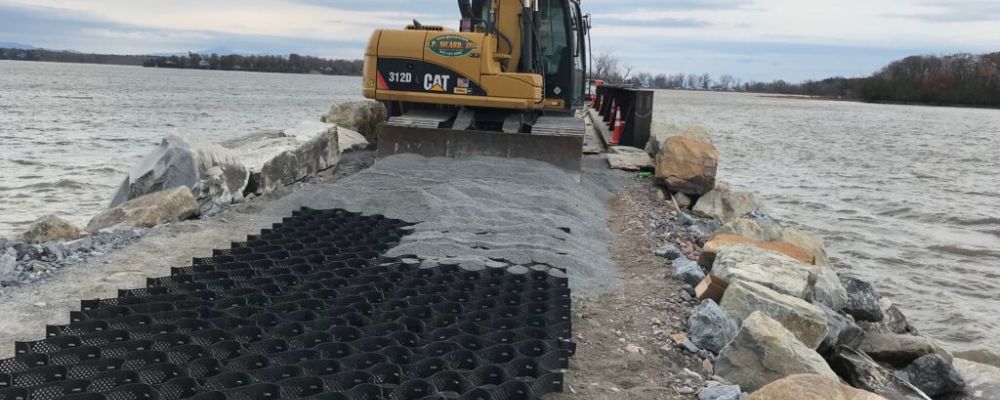
When extreme weather events occur, communities are often left to grapple with the devastating effects. An increase in extreme weather patterns, coupled with aging or inadequate infrastructure, amplifies the often dangerous and costly damage that ensues—especially for vulnerable communities living in low-lying areas.
In this webinar, we will discuss how to incorporate GEOWEB® geocells into projects to create climate-resistant infrastructure in load support, slope stabilization, channel protection, and retaining wall applications. The discussion will include solutions for an array of industries, including energy, transportation, and stormwater management. Project case studies will show how this advanced geosynthetic technology can be used for rebuilding storm-ravaged roads, repairing and stabilizing channel embankments, and preventing flooding after extreme weather events.
Learning Objectives:
I attest to having viewed the on-demand webinar and wish to proceed to my PDH certificate.
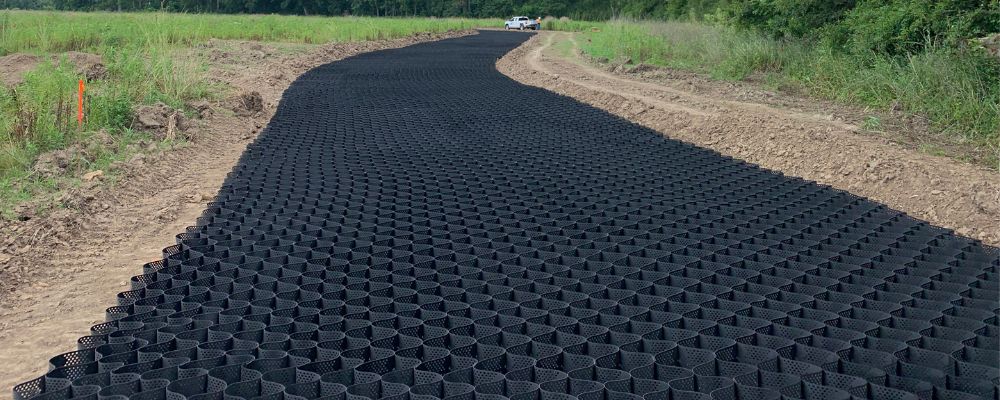
When paved and unpaved roadway surfaces are built over weak subgrades, base deterioration can lead to degradation. This causes unwanted deflections, rutting, and cracking in the surface layer. Using the GEOWEB® Soil Stabilization System reduces the vertical pressure on roadways and provides a high-stiffness foundation. This increases the load capacity of the subgrade allowing it to more effectively handle heavy and repeated vehicle loads.
In the base layer under hard pavements, confinement of aggregate significantly reduces movement and settlement, increasing the life of the pavement. Unpaved roadways also benefit from a more stable surface that performs as an on-site stormwater “detention” basin, promoting infiltration at the source and reducing runoff.
Learning Objectives:
I attest to having viewed the on-demand webinar and wish to proceed to my PDH certificate.
Featured Project:
Brandywine Solar Farm Permeable Site Access Road
The Challenge:
The project owner, Vanguard Energy, required a site access solution to allow safe, long-term access for maintenance and emergency-vehicle access. While traffic would be infrequent, the roadway needed to support up to a 70,000-pound fire truck.
To achieve this, they decided to build a permeable site-access road utilizing a soil stabilization system that would adhere to permitting requirements and support the weight of heavy vehicles.
The Solution:
Vanguard Energy reached out to Presto Geosystems and local material supplier, Colonial Construction Materials, to devise a solution that would meet their needs. They chose the GEOWEB® Load Support System with a vegetated infill to construct the permeable access road into the solar farm.
Building longer-lasting roads is all about keeping subgrade and subbase materials stable even in challenging site conditions.
Under pavements, designing a strong, stable base that resists movement has a powerful effect on reducing maintenance and stopping the deterioration that ultimately causes pavements to fail.
The best way to do this is with the GEOWEB® (Geocells) soil stabilization system, especially when dealing with soft subgrades.
The 3D confinement delivers higher performance and offers adaptability with varying fill materials, subgrades and loading stresses—fill and base materials are safely contained in the geocellular structure—and highly resistant to movement.
How can we help you with your next road challenge?
Looking for a reliable solution to stabilize slopes and channels? The GEOWEB® Slope & Channel Protection System offers a durable, cost-effective way to prevent erosion and washout, even on challenging terrain.
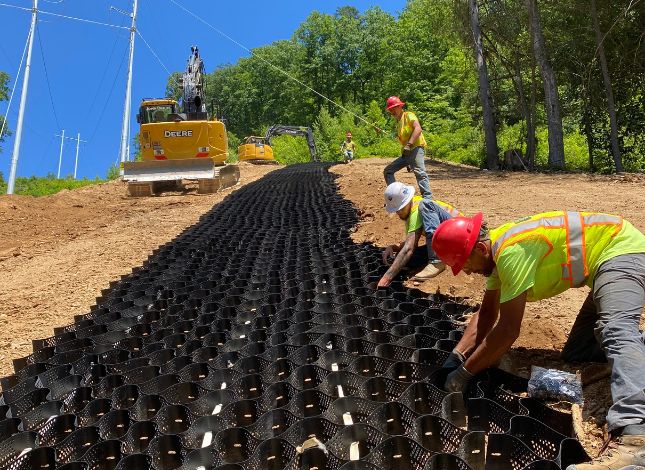
In this webinar, we will review installation techniques for the four major applications of the GEOWEB® geocells: Load Support, Slope Protection, Channel Armoring, and Earth Retention. We will offer professional tips and best practices to streamline your installation process, saving you both time and money. This intermediate-level webinar is designed for those who already have some experience with the GEOWEB system and are looking to enhance their knowledge of the installation process; however, all are welcome to attend.
Learning Objectives:
Request a free project evaluation: https://www.prestogeo.com/free-project-evaluation/
I attest to having viewed the on-demand webinar and wish to proceed to my PDH certificate.
Presto Geosystems provides its GEOWEB® MSE Wall Design Software free of charge for designing both gravity and reinforced wall applications. This tool enables the creation of vegetated and non-vegetated MSE structures, drawing on the GEOWEB System inputs for reinforced slopes, gravity walls, and geogrid-reinforced walls. The software employs industry-standard design methods and includes specific algorithms that account for the unique interaction between the GEOWEB System, retained soil, foundation, and reinforced soil, incorporating particular safety factors and, where necessary, geogrid reinforcement.
This webinar will provide an in-depth tour of the MSE Wall Design Software. You will learn how to navigate the software and input simple data to create a full-graphic design analysis and cross-sectional drawing.
In this webinar, you will learn:
I attest to having viewed the on-demand webinar and wish to proceed to my PDH certificate.


