
Geoweb® Channel Protection System
ECONOMICAL & SUSTAINABLE SOLUTIONS FOR STABILIZING CHANNELS
Stabilize soils and prevent erosion on channel embankments exposed to low-to-high flows. Protect geomembrane-lined channels and containment systems. Eliminate the need for costly rip rap in drainage ditches and stormwater swales by using a low-maintenance, vegetated Geoweb/TRM system to resist higher velocities.
The Presto Geoweb® Channel Protection System is a proven solution for stabilizing and protecting channels exposed to erosive conditions of all types. Whether low or high flows, intermittent or continuous, the Geoweb system can be designed to withstand even the highest velocities. Up to 30 ft/sec (9m/sec) with vegetation. Learn How).
The Geoweb system is the original cellular confinement system developed by Presto nearly 30 years ago and offers sustainable protection for channels of all types:
- Vegetated Protection
- Aggregate Protection
- Concrete Hard-Armored Protection
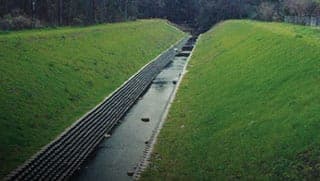
Vegetated Protection: Replaces costly rip rap with lower-maintenance, less expensive stabilized vegetation. Effective in low-flow channels and when low-to-high intermittent flows occur. Combined with a TRM, the vegetated Geoweb system can withstand velocities as high as 30 ft/sec (9m/sec).* That means you can now replace costly and high-maintenance rip rap with more attractive stabilized vegetation in drainage ditches, swales and stormwater channels. *CSU Research Results
Aggregate Protection: Aggregate confined in the Geoweb system is more stable than unconfined aggregate. That means smaller, less expensive infill can be used in low-to-moderate flow conditions. * CSU Research Results
Concrete Hard-Armor Protection: For channels exposed to severe hydraulic stresses, the Geoweb system's formwork allows concrete to be poured on-site. It creates an easy-to-install, flexible hard-armored system that is less costly than pre-formed concrete systems.
Multi-Layered Protection: Geoweb multi-layered, vegetated channels create natural living retaining walls that can withstand high flows for short durations. Because of their light weight, they can tolerate reasonable differential settlement in soft soil environments and maintain their structural integrity. A steeper channel profile saves cost by reducing land use. Contractors will also save on installation costs because the system is quicker and easier to install than typical block systems.
Geomembrane Protection: The Geoweb system is a proven solution for protectingliners and reducing the sliding potential of infill cover.High-strength tendons become part of the design solution that Presto offers.
SCOUR PROTECTION
When concentrated flows or water fluctuations cause scour, consider the Presto GeoRunner® Flow Protection Mats. These durable mats protect against scour caused by surface flow, water fluctuation and light wave action. They’re ideal for protecting embankments in drainage ditches, spillways, shorelines, culvert outfalls and areas exposed to intermittent or concentrated flows. The mats are securely anchored to resist pull-out caused by saturated soils. An open mesh design allows dense grass growth through the openings, increasing system stability, reducing visibility, and allowing natural blending with the environment.
Key Applications
- Stormwater Channels
- Drainage Swales, Ditches & Canals
- Floodplain Channels
- Spillways / Down Chutes / Drop Structures
- Culvert Outfalls
Design Specs & Construction Tools
Build a customized specification the easy way with the Presto SPECMaker® Specification Tool. Complimentary Geoweb project evaluation service is also available.
Green Solutions
Contributes to US Green Building Council LEED® green building credits in the categories for reducing site disturbance, stormwater quantity and quality control and regional materials (if applicable).
Contractor Tools
Construction-friendly, time-savings accessories and tools may be part of the system: ATRA® Keys, ATRA® Clips/Anchors, ATRA® Restraint Clips, ATRA® Driver® System, and Tendons.
Request Literature
Design and construction information is available. If you would like information mailed to you, please fill out our Literature Request Form.


